
If your hair has started to feel thinner, flatter, or harder to style as you move through your forties and fifties, menopause is very likely part of the reason. Thinning hair is one of the most common and least talked about changes women notice during this stage of life, and it can be frustrating precisely because it happens so gradually. Understanding why it is happening is the first step toward feeling in control of it again.
This guide explains what menopause does to your hair, what the thinning typically looks like, the options for managing it, and how to feel like yourself while you do.
Why Menopause Affects Your Hair
Your hair is closely tied to your hormones, so when those hormones shift during perimenopause and menopause, your hair often shifts with them.
The Role of Estrogen
Estrogen helps keep hair in its growing phase longer, which is part of why many women have their fullest hair in their younger years. As estrogen levels fall during menopause, hairs spend less time growing and more time resting and shedding, and the influence of androgens becomes relatively stronger. The result is gradual thinning, most noticeable at the crown and along the part.
Why Hair Gets Finer, Not Just Thinner
Menopause does not only mean fewer hairs. Individual strands often grow back finer and more fragile, and hair can feel drier as oil production changes. Together, these shifts make hair look and feel less dense even before a lot has actually been lost.
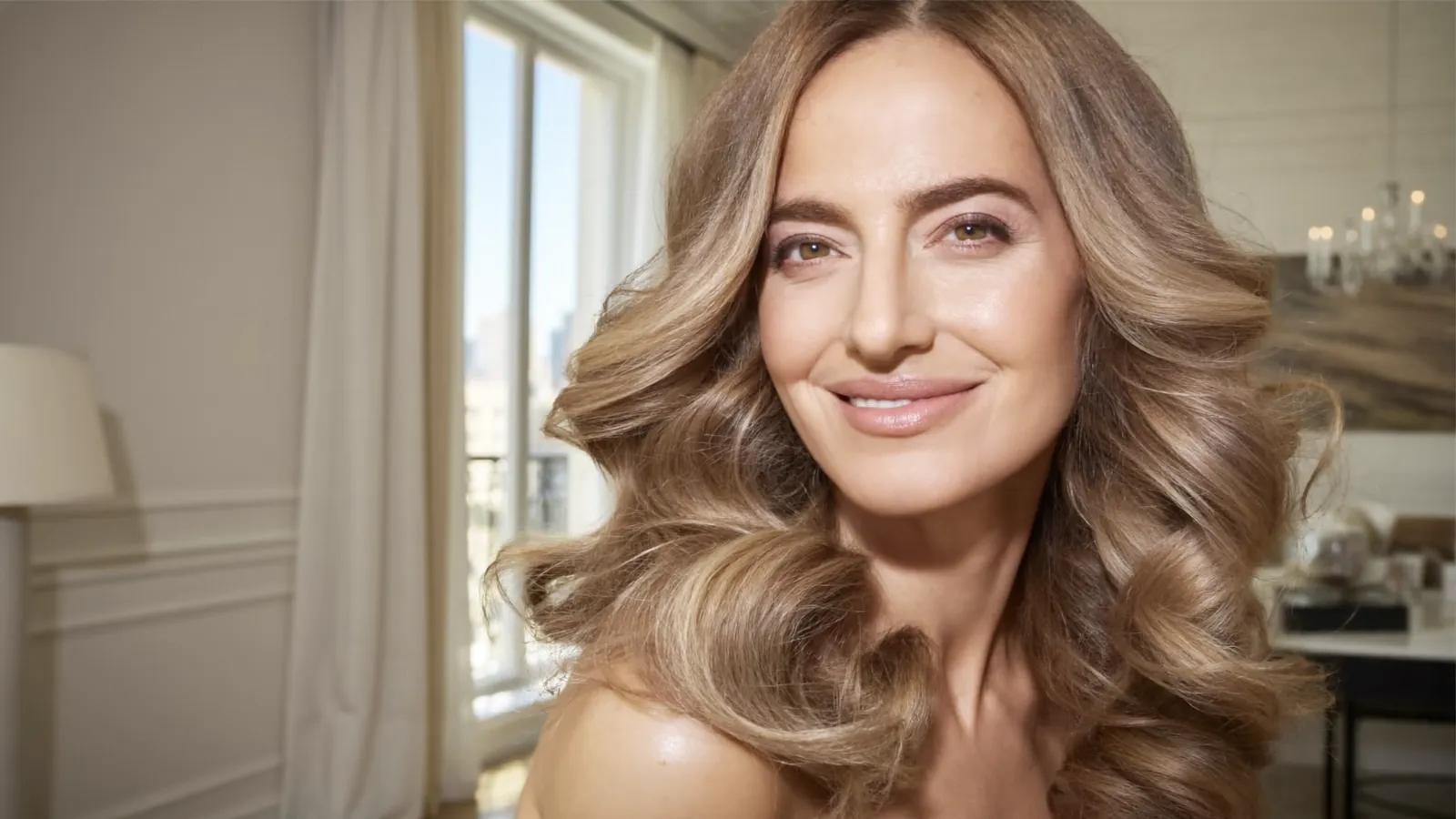
What Menopausal Hair Thinning Looks Like
Knowing the signs helps you tell menopausal thinning apart from other kinds of hair loss.
A Wider Part and Less Volume
The most common signs are a part that looks wider, a ponytail that feels thinner, and a general loss of volume at the top and crown. The hairline usually stays intact, which is one way it differs from some other forms of hair loss.
How It Differs From Temporary Shedding
Unlike the sudden, heavy shedding that can follow an illness or childbirth, menopausal thinning is usually gradual and ongoing. It tends to develop slowly over months and years rather than all at once, which is why many women do not notice it until it is well underway.
Your Options for Managing It
There is no single fix, but there is a lot you can do to support your hair and protect the density you have.
Care for Your Hair and Scalp
Be gentle. Use volumizing, sulfate-free products, avoid excessive heat and tight styles, and keep your scalp healthy, since strong hair starts at the root.
Support It From the Inside
A balanced diet with enough protein, iron, and key vitamins gives your hair what it needs to grow. Your doctor can check for deficiencies that menopause can make more likely.
Talk to Your Doctor About Medical Options
Several medical and hormonal treatments can help slow or improve menopausal thinning. A doctor or dermatologist can tell you which, if any, are right for you, so this is a conversation worth having early.
Style for Fullness
The right cut, color, and styling can create the appearance of more density. A stylist who understands thinning hair can make a real difference in how full your hair looks day to day.
How Studio T Hair Toppers Help
When you want reliable fullness now, not months from now, a hair topper is one of the most natural and immediate solutions for menopausal thinning.
Coverage Exactly Where Menopause Thins
A Studio T Hair Topper adds density right where menopause tends to show most, the crown and the part. It clips gently into your own hair and blends in on all sides, so the coverage looks like it is simply growing from your scalp.
Custom Color and Fit
Every topper is hand-matched to your color in natural lighting and cut into your existing style, so the two move as one with no obvious line where your hair ends and the topper begins.
100 Percent European Remy Human Hair
Studio T toppers are made from 100 percent European Remy human hair with the cuticle intact, which gives them the natural shine, movement, and longevity that makes them blend so seamlessly with fine, thinning hair.
Frequently Asked Questions
Is thinning hair a normal part of menopause?
Yes. Many women experience some degree of thinning during perimenopause and menopause due to falling estrogen levels. It is extremely common, even though it is rarely talked about.
Will my hair grow back on its own?
Menopausal thinning is usually gradual and ongoing rather than something that reverses on its own. Some treatments can help slow or improve it, and a topper gives you full, natural-looking coverage in the meantime. Your doctor can advise on what to expect for your situation.
Will a hair topper damage my thinning hair?
No. A properly fitted Studio T Hair Topper is designed to be gentle, clips in without stressing the hair, and is removed before sleeping, showering, and swimming. Many women find it far easier than fighting to style thinning hair every day.
When should I see a doctor?
If your thinning is sudden, patchy, or comes with other symptoms, see a doctor or dermatologist to rule out other causes such as thyroid issues or iron deficiency, which become more common around menopause.
Book Your Free Consultation at Studio T Salon
If menopause has changed your hair, you do not have to simply live with it. Studio T Salon offers free consultations. Send photos of your hair in natural lighting and our team will help you find the right option for your hair and your goals.
Book a free consultation with Studio T Salon and explore handcrafted Studio T Hair Toppers made to look and feel like your own hair.


